A well-built road or driveway provides reliable access to your property in any weather. Whether you need a residential driveway, a ranch road to reach back pastures, or access roads for a development project, Foster Land Modifications has the equipment and experience to build routes that last. We serve Arthur City and throughout Northeast Texas and Southern Oklahoma, bringing over 35 years of dirt work experience to every project.
We build private driveways for homeowners, internal roads for subdivisions and developments, and ranch roads that handle everything from pickup trucks to loaded haul trucks. Every road starts with proper planning and ends with a finished surface that handles Texas weather without washing out or becoming impassable.
What Makes a Good Road
A road that lasts needs more than just gravel on top of dirt. It requires proper base preparation, attention to drainage, appropriate materials for the expected use, and correct compaction to prevent rutting and settling. The best roads shed water effectively so rain doesn’t pool on the surface or wash out the base material.
We’ve built hundreds of roads and driveways over the years and understand what separates routes that last from those that turn into maintenance headaches after the first heavy rain. The difference is in the details of how the road is built, not just how it looks when we leave.
Site Preparation and Clearing
Road construction starts with clearing and rough grading the route. We use track hoes and dozers to remove vegetation, stumps, rocks, and other obstacles. If the route passes through wooded areas, we clear a wide enough path for the road plus proper drainage on both sides.
Rough grading establishes the basic elevation and shape of the roadbed. We cut down high spots, fill low spots, and create the foundation that will support the finished road. This early work determines how well the finished road will drain and how stable it will be under load.
Base Work and Compaction
Once the route is cleared and roughly graded, we prepare the roadbed itself. The native soil is shaped and compacted to create a stable base. In areas with poor native soil, we may need to add base material before moving to final surfacing. The goal is a firm, well-compacted foundation that won’t shift or settle under traffic.
We compact in layers, not all at once. This approach takes more time but creates roads that hold up to use. Skipping proper compaction might save hours during construction, but it costs you years of road life.
Drainage Design
Water is the enemy of any road. Without proper drainage, rain collects on the surface, softens the base, and washes away material. Over time, this creates potholes, ruts, and sections that become impassable in wet weather.
We design every road to shed water effectively. This starts with crowning the road surface so water runs to the edges rather than pooling in the center. We create ditches or swales alongside the road to carry water away, and we install culverts where the road crosses natural drainage paths. The result is a road that handles rain without damage.
Surface Materials
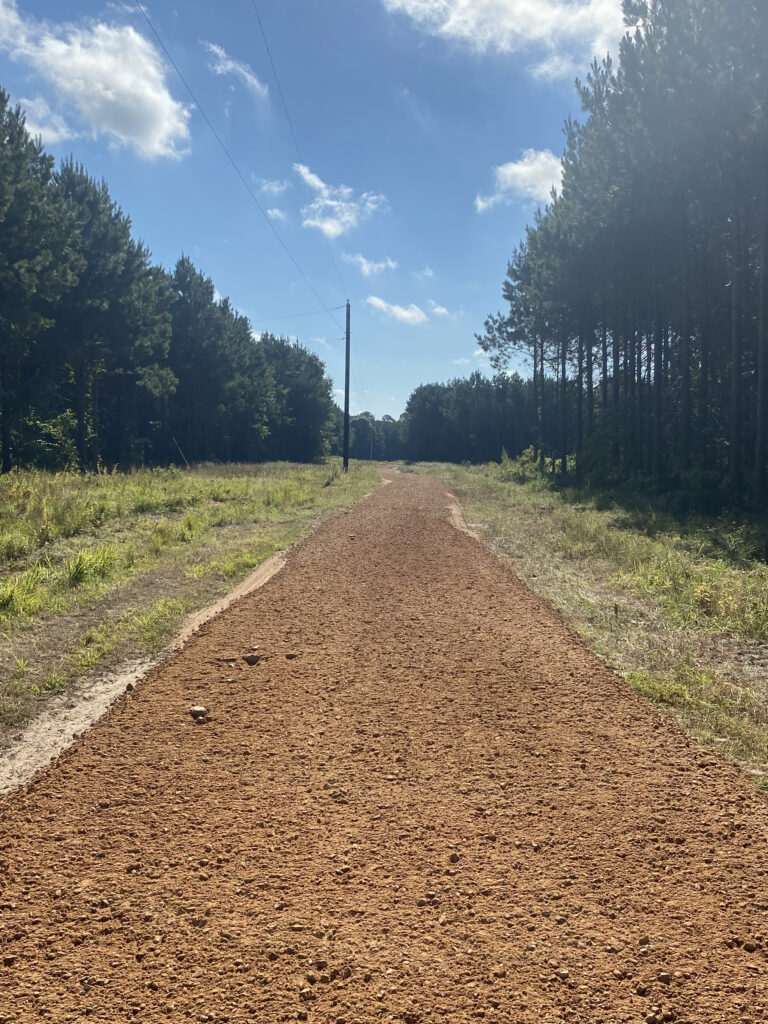
The final surface material depends on the road’s use and your budget. Gravel is the most common choice for private driveways and ranch roads. We use well-graded gravel that compacts firmly and resists rutting. The amount of gravel needed depends on expected traffic and soil conditions underneath.
For heavier use or longer roads, crushed stone base topped with finer gravel may be appropriate. This creates a more stable surface that holds up to regular traffic from heavier vehicles. We discuss material options during the estimate and recommend what makes sense for your specific situation.
Ranch Roads
Ranch roads face unique challenges. They need to handle trucks, tractors, and equipment while providing access to remote areas of the property. Many ranch roads see irregular use, which means they need to hold up during long periods without traffic and still be passable when you need them.
We build ranch roads with the understanding that they’re working infrastructure, not just access routes. That means adequate width for equipment, proper grades on hills, turnaround areas where needed, and drainage that works even in locations that don’t see regular maintenance.
Residential Driveways
Home driveways require different consideration than ranch roads. They’re shorter, see less heavy traffic, but are visible from the house and need to look good while functioning well. We build driveways that complement your property, provide smooth access to garages and parking areas, and handle daily use without constant maintenance.
Driveway design considers the slope from the road to your house, drainage away from structures, and appropriate materials for the expected use. A driveway for occasional car traffic needs different construction than one that will see regular use by trucks or RVs.
Subdivision and Development Roads
For larger projects, we build internal road systems that serve multiple lots or properties. These roads need consistent grades, proper intersections, adequate width for two-way traffic, and drainage that handles runoff from the entire development. We’ve completed projects with miles of internal roads serving dozens of lots.
Development road work often happens in phases as lots sell or as different areas of the project are developed. We can work with phased construction schedules and return for additional road sections as the project progresses.
Service Area
We provide road construction and driveway services throughout Arthur City, Paris, Sulphur Springs, Sherman, Gainesville, Emory, and the surrounding Northeast Texas region, as well as parts of Southern Oklahoma. For larger development projects, we’re willing to travel further. Contact us to discuss your project location.
Experience You Can Trust
Casey Foster has been building roads and working with heavy equipment for over 35 years. That experience means we understand how different soils respond to traffic, how to design drainage that works in Texas weather, and what it takes to build roads that don’t require constant repair.
We own and maintain our own dozers, track hoes, and support equipment. When we start your road, we have everything needed to complete it. You work directly with Casey throughout the project, from initial planning through final surface application.
Road Construction & Driveways FAQs
How long does a gravel driveway last? A properly built gravel driveway lasts many years with minimal maintenance. How long depends on traffic volume, vehicle weight, drainage quality, and whether you refresh the gravel occasionally. Driveways that see only light car traffic and have good drainage can go five to ten years or more before needing significant additional gravel. Those with heavy truck traffic or poor drainage may need attention sooner. Annual grading or occasional gravel addition keeps most driveways in good shape.
What’s the difference between different types of gravel? Gravel comes in different sizes and compositions. Crushed rock with a mix of sizes compacts better than rounded river rock. The “fines” (smaller particles) in well-graded gravel help bind the larger stones together, creating a firmer surface. We use gravel appropriate for your specific use—driveways that see regular car traffic get different material than ranch roads that handle loaded trucks. During your estimate, we recommend the best gravel type for your situation.
Will my driveway wash out in heavy rain? Proper drainage and construction prevent most washout problems. We crown driveway surfaces so water runs to the edges rather than down the middle. We create drainage along the sides to carry water away, and we install culverts where water needs to cross under the driveway. Roads and driveways built with attention to drainage typically hold up well even in heavy Texas rains. The steeper your driveway, the more important proper drainage becomes.
How wide should a ranch road be? Most ranch roads work well at 12 to 14 feet wide—enough for a truck pulling a trailer to travel comfortably and wide enough for two vehicles to pass carefully. Roads that serve as primary access to large portions of the property may benefit from being wider, especially if you’re regularly running large equipment. Minimum turnaround or passing areas become important on longer, narrower roads. We discuss your typical equipment and traffic patterns during planning to recommend appropriate width.
Can you build a road through woods or steep terrain? Yes, we regularly build roads through challenging terrain. Wooded areas require more clearing time and may need more base work if tree roots have affected the soil. Steep terrain requires careful attention to grades—roads built too steep become difficult to use safely, especially in wet weather. Sometimes the best route isn’t the shortest one. We assess the terrain during site visits and recommend routes that balance construction cost with long-term usability.
How much gravel do I need for my driveway? Gravel depth depends on traffic and underlying soil conditions. Most driveways benefit from 4 to 6 inches of compacted gravel. Longer driveways, those with heavy use, or those on poor native soil may need more. A typical residential driveway 200 feet long and 12 feet wide needs roughly 30 to 40 tons of gravel for a 4-inch depth. We calculate specific amounts during the estimate based on your driveway dimensions and conditions.
Get Your Free Estimate
We provide free estimates for all road construction and driveway projects. Casey will visit your property, walk the proposed route, and discuss what you need. The estimate covers clearing, grading, base work, material, and all finishing work needed to complete your road or driveway.
Call (903) 754-7601 to schedule your estimate, or use our contact form to provide project details. We’re available seven days a week and serve Arthur City and throughout Northeast Texas and Southern Oklahoma.