Standing water and poor drainage damage property, create maintenance headaches, and limit how you can use your land. Whether water pools near your house after every rain, your driveway washes out regularly, or parts of your pasture stay soggy for weeks, Foster Land Modifications can design and implement drainage solutions that fix the problem. We serve Arthur City and throughout Northeast Texas, bringing over 35 years of dirt work experience to every drainage project.
Effective drainage moves water away from buildings, roads, and other areas where it causes problems. We assess your property’s natural water flow, identify why water isn’t moving properly, and create practical solutions using grading, swales, culverts, and other proven methods.
Common Drainage Problems
We see several types of drainage issues regularly. Water pooling around foundations threatens basements and can cause structural damage over time. Driveways and roads that wash out or become impassable after rain create access problems and require constant regrading. Pastures with poor drainage stay muddy, making them difficult to use and hard on livestock. Yards that don’t drain become unusable after rain and may develop erosion problems.
Sometimes poor drainage results from how a property was originally graded. Other times, nearby construction or land changes alter water flow patterns. Regardless of the cause, the solution involves redirecting water along a better path.
How We Assess Drainage Issues
Solving drainage problems starts with understanding where water comes from and where it wants to go. We visit your property, look at the areas causing problems, and trace the water flow during and after rain. Often, the issue isn’t where water is pooling—it’s somewhere upstream where water should be redirected but isn’t.
We also consider how surrounding land affects your property. Water from neighboring properties may contribute to your drainage issues. Roads, buildings, or other features may block natural drainage paths. Understanding the complete picture helps us design solutions that actually work rather than just moving the problem somewhere else.
Grading Solutions
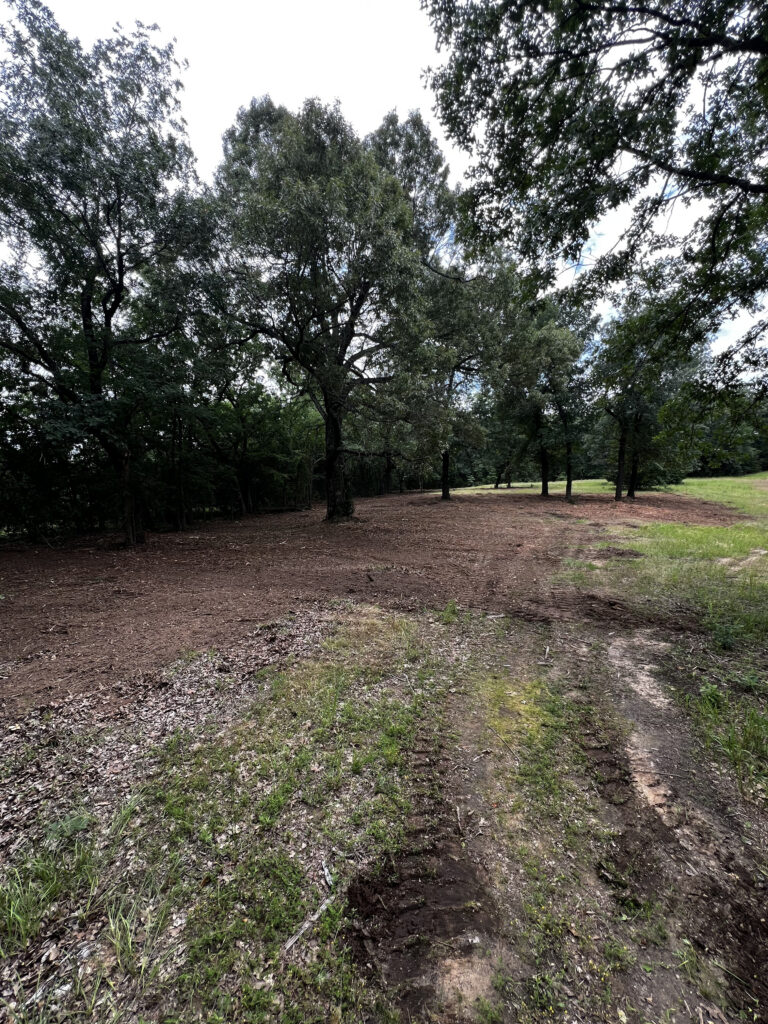
Many drainage problems can be solved with proper grading. We use dozers to reshape problem areas, creating gentle slopes that direct water away from buildings, roads, or other sensitive areas. The goal is to establish a clear path for water to follow, moving it from where it’s causing problems to where it can safely be absorbed or carried away.
Grading solutions work particularly well around buildings where water pools against foundations, in yards that hold water after rain, and on driveways or parking areas where water sits instead of running off. Sometimes the solution is subtle—just a degree or two of slope change—but it makes all the difference in water movement.
Swales and Drainage Ditches
When grading alone isn’t enough, we install swales or drainage ditches to actively channel water along a defined path. A swale is a shallow, vegetated channel designed to convey water while allowing some absorption. Drainage ditches are typically deeper and often line access roads or property boundaries, capturing and channeling water away from areas that need to stay dry.
We dig swales and ditches using our track hoes and dozers, creating channels with appropriate depth, width, and slope to handle expected water volume. The channels get shaped to prevent erosion while moving water efficiently. On larger properties, we may install a network of connected swales that gather water from multiple problem areas and direct it to a single discharge point.
Culvert Installation
Roads, driveways, and other features often block natural drainage paths. Water builds up on one side, creating flooding or washout problems. The solution is installing culverts—pipes that allow water to flow under the obstruction.
We install culverts where driveways cross natural drainage paths, under low spots in roads where water accumulates, and at property entrances where water needs to cross from one side to the other. Proper culvert installation requires correct sizing to handle peak water flow, proper slope to keep water moving, and adequate cover to protect the pipe from traffic loads.
French Drains and Subsurface Drainage
Some drainage problems involve water that stays at or just below the surface, keeping the ground soggy without obvious standing water. These situations may benefit from French drains or other subsurface drainage systems.
A French drain uses a perforated pipe surrounded by gravel in a dug trench. Water seeps into the gravel, enters the pipe, and gets carried away underground. These systems work well around foundations, in areas that stay persistently wet, and where surface drainage solutions aren’t practical due to aesthetics or space constraints.
We can install basic French drain systems as part of our dirt work services. More complex subsurface drainage requiring extensive drainage tile networks may require specialized contractors, and we can help you connect with appropriate resources if needed.
Retention and Detention Solutions
Some properties need places to temporarily hold water during heavy rains, releasing it gradually rather than all at once. Retention basins hold water permanently, essentially small ponds that collect runoff. Detention basins temporarily store water and release it slowly through controlled outlets.
These solutions work for properties where water comes from large drainage areas, when downstream areas can’t handle full peak flows, or when you need to capture sediment before water leaves your property. We design and build retention or detention features sized appropriately for your property’s drainage patterns.
Erosion Control
Water moving too fast causes erosion, eating away soil and creating gullies. Slowing water movement protects your property and prevents drainage problems from getting worse. We address erosion through proper channel design that slows water velocity, installing check dams or similar features in swales and ditches, and establishing vegetation that stabilizes soil while allowing water flow.
Erosion control is particularly important on sloped properties where water naturally wants to run fast and on properties with soil types prone to washing away. Building erosion resistance into the drainage design from the start prevents future problems.
Service Area
We provide water drainage solutions throughout Arthur City, Paris, Sulphur Springs, Sherman, Gainesville, Emory, and the surrounding Northeast Texas and Southern Oklahoma region. Contact us to discuss your property location and drainage challenges.
Why Choose Foster Land Modifications
Casey Foster has been working with land and water management for over 35 years. That experience includes seeing how different soil types handle water, understanding how Texas weather patterns affect drainage needs, and knowing what solutions actually work long-term versus quick fixes that fail after the first major rain.
We own our own equipment, which means we can tackle drainage projects of any size from simple regrading to complex multi-element systems. You work directly with Casey throughout the process, from initial site assessment through completion and follow-up after the next rain.
Water Drainage Solutions FAQs
How do I know if my drainage problem can be fixed? Most drainage problems can be fixed with the right approach. During the site visit, we assess where water is coming from, why it’s not draining properly, and what’s needed to redirect it. Some solutions are straightforward grading adjustments. Others require more involved work like swales or culvert installation. In rare cases, drainage issues result from factors outside your property that require working with neighbors or local drainage districts. We let you know what’s possible during the estimate.
Will fixing drainage in one area create problems somewhere else? Done properly, drainage solutions move water to areas where it can be safely absorbed or discharged without creating new problems. We think through the complete water path when designing solutions, making sure we’re not just shifting the issue to a different part of your property or onto neighboring land. Sometimes the solution includes both redirecting water away from problem areas and creating places where redirected water can go safely.
How long does it take to complete drainage work? Simple grading fixes might take a day or two. More complex projects involving multiple swales, culvert installation, or extensive reshaping take longer. The size of your property and the scope of the problem determine timeline. We provide time estimates with your quote. Weather affects drainage work more than most other services we provide—we need relatively dry conditions to properly grade and shape drainage features.
Can you fix drainage around an existing building? Yes, we regularly address drainage problems around existing homes and buildings. The approach depends on how close we need to work to the structure and what’s causing the problem. Sometimes the fix is regrading the surrounding area to slope away from the building. Other times we install French drains or similar subsurface systems that collect and redirect water underground. We work carefully around buildings, landscaping, and utilities to solve the drainage problem without causing new issues.
Will grass grow back in the areas you work on? Grass grows back naturally in most areas where we’ve completed drainage work, especially in Northeast Texas where we get adequate rainfall. Swales and regraded areas may benefit from seeding to speed up the process and prevent erosion while vegetation establishes. Areas that will regularly carry flowing water may be slower to revegetate or may need erosion control measures like rock lining. We discuss revegetation during planning and can include seeding in the project if desired.
How much does drainage work typically cost? Cost varies dramatically based on the scope of work needed. Simple regrading to fix minor drainage issues costs less than installing extensive swale systems or multiple culverts. The amount of dirt that needs moving, the size of the problem area, and whether we’re working around existing structures or in open areas all affect cost. We provide specific pricing during the free estimate after assessing your property.
Get Your Free Estimate
We provide free estimates for all drainage projects. Casey will visit your property, assess the problem areas, and discuss practical solutions that fit your situation and budget. The estimate covers all work needed to solve your drainage problems.
Call (903) 754-7601 to schedule your estimate, or use our contact form to describe your drainage issues. We serve Arthur City and Northeast Texas and are available seven days a week.