When your property needs professional excavation and dirt work, Foster Land Modifications delivers the equipment, experience, and results that Northeast Texas landowners depend on. Based in Arthur City along the Red River in Lamar County, owner Casey Foster has been running heavy equipment and moving dirt for over 35 years — building a reputation from Chicota to Sulphur Springs for getting the work done right the first time.
We provide excavation services for residential homeowners, ranchers, commercial developers, and utility companies throughout Lamar County, Fannin County, Hopkins County, Red River County, and into Southern Oklahoma. Whether you need a building site excavated and prepared for a new home, a pasture regraded, or an entire development prepped from raw land, we have the dozers, track hoes, skid steers, and support equipment to handle the job.
What Is Excavation & Dirt Work?
Excavation and dirt work is the foundation of almost every land development project. It involves moving, removing, and reshaping earth to prepare a property for construction, drainage, access, or agricultural use. In Northeast Texas — where blackland prairie clay dominates from the Red River bottoms south through Paris, Blossom, and Roxton — proper excavation isn’t optional. It’s the difference between a project that lasts and one that settles, shifts, or floods.
Dirt work covers a broad range of services: digging foundations, grading slopes, cutting drainage channels, hauling fill material, compacting soil, and shaping land to meet engineering requirements. At Foster Land Modifications, excavation and dirt work is what ties all of our specialized services together. It’s the common thread running through house pad construction, pond building, road installation, and land clearing.
Types of Excavation Services We Provide
Residential Excavation
Building a home near Pat Mayse Lake, along FM 197, or anywhere in the Arthur City area starts with proper excavation. We dig out unstable native soil, haul in select fill, and compact it in controlled lifts to create a stable building pad. For homeowners in the blackland clay areas around Paris and Powderly, this excavation work is critical — skipping it means foundation problems within a few years. We handle everything from single home sites off County Road 35860 to multi-lot developments along Highway 271.
Commercial & Industrial Excavation
Commercial projects throughout the Sherman–Denison corridor, along Interstate 30 near Sulphur Springs, and across the broader Northeast Texas region require excavation at scale. We prepare sites for warehouses, retail buildings, agricultural facilities, and industrial operations. Our equipment fleet includes multiple dozers and track hoes that can run simultaneously, and for larger projects we can bring in 12 to 13 additional machines through our contractor network.
Ranch & Agricultural Excavation
Working ranches from Gainesville east to Broken Bow need ongoing excavation support. We dig stock ponds, reshape pasture drainage, cut terraces into hillsides, clear and grade fence lines, and build ranch roads. Many of our ranch clients between Emory and Hochatown have ongoing relationships with us — when a new section of land needs development or an old pond needs reshaping, we’re the first call they make.
Utility & Emergency Excavation
We work with Oncor and other utility companies providing excavation support during ice storms, tornadoes, and other weather emergencies that hit the Red River Valley. When downed trees and debris block access roads or damage utility corridors, our dozers and track hoes can be deployed quickly to restore access. This work takes us from the Oklahoma border south through Honey Grove, Bonham, and beyond.
How Excavation & Dirt Work Is Done: A Step-by-Step Guide
Understanding what goes into professional excavation helps you plan your project and set realistic expectations. Here’s how we approach excavation and dirt work at Foster Land Modifications.
Step 1: Site Assessment & Soil Evaluation
Every excavation project starts with Casey visiting your property to walk the site. We evaluate the terrain, identify soil types, check for drainage patterns, and note any obstacles like rock outcroppings, buried utilities, or existing structures. In the blackland regions around Paris, Chicota, and Roxton, soil composition heavily influences how deep we need to dig and what type of fill we’ll need to bring in. We also assess access routes for our equipment — getting a D6 dozer to a back pasture near the Red River bottoms requires different planning than accessing a lot off Loop 286 in Paris.
Step 2: Project Planning & Estimating
Based on the site assessment, we develop a work plan that covers the scope of excavation, equipment needed, material requirements (select fill, dirt, gravel), and a realistic timeline. Weather is a major factor in Northeast Texas — the blackland clay that dominates from Sulphur Springs to Sherman becomes unworkable after heavy rain, so we build weather contingencies into every project schedule. We provide a clear, written estimate that covers all costs so you can make informed decisions.
Step 3: Site Clearing & Preparation
Before excavation begins, the site needs to be cleared of vegetation, trees, stumps, and debris. We use our track hoes and dozers to strip the site down to raw earth. On heavily wooded properties common between Arthur City and Hochatown in McCurtain County, this clearing phase can be substantial. Cleared material is piled for burn clearing or hauled away depending on local regulations and your preference.
Step 4: Excavation & Earth Moving
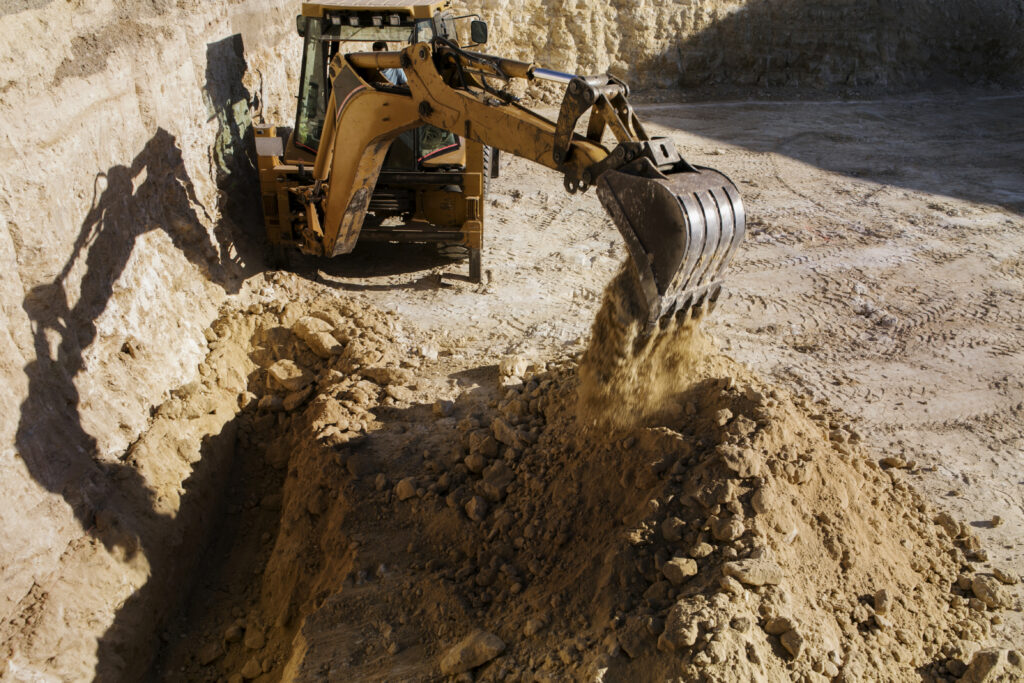
This is the core of the work. Using track hoes for precision digging and dozers for bulk earth moving, we reshape the land according to the project plan. For building pads, we dig out unstable native soil to the required depth. For ponds, we excavate the basin and use the spoil to build dams. For roads, we cut and fill to establish proper grade. The specific approach depends on your project, but the equipment and expertise remain consistent.
Step 5: Fill Placement & Compaction
When excavation removes soil that needs to be replaced — particularly on house pads where blackland clay is swapped for select fill — we place new material in controlled lifts of 6 to 8 inches. Each lift is spread evenly and compacted thoroughly before the next layer goes down. This layered compaction approach is what separates professional excavation from someone just pushing dirt around with a rented machine. Proper compaction prevents settling and ensures long-term stability.
Step 6: Final Grading & Drainage
Once excavation and fill work is complete, we grade the site to final elevations. This includes establishing drainage slopes that move water away from structures, creating swales or ditches where needed, and ensuring the finished surface matches engineering specifications. Proper grading is especially important on properties near the Red River floodplain, around Pat Mayse Lake, and in the low-lying areas between Powderly and Blossom where water management is an ongoing concern.
Step 7: Site Cleanup & Final Walkthrough
After excavation and grading are complete, we clean up the site, remove any equipment staging materials, and do a final walkthrough with you. Casey reviews the completed work, confirms everything meets the project specifications, and addresses any questions. The goal is a finished site that’s ready for the next phase — whether that’s pouring a foundation, seeding grass, or beginning construction.
What Sets Our Excavation Process Apart
Owner-Operated From Estimate to Completion
When you call Foster Land Modifications, you talk directly to Casey Foster — the same person who will assess your property, provide your estimate, operate the equipment, and oversee the finished product. There are no sales representatives, project managers, or office staff between you and the person doing the work. This direct communication eliminates the misunderstandings and delays that plague larger excavation companies operating in the DFW metroplex. You get straightforward answers and honest timelines.
Equipment Built for Northeast Texas Conditions
We own and maintain our own fleet of dozers, track hoes, skid steers, loaders, and all necessary support equipment. Every machine is chosen for the specific demands of Northeast Texas terrain — from the sticky blackland clay that stretches across Lamar County and Fannin County to the sandy loam found along the river bottoms. For projects that require additional equipment, we can bring in 12 to 13 additional dozers through our network, scaling up for large commercial or multi-lot residential developments.
35+ Years of Reading Northeast Texas Soil
Casey has been operating heavy equipment since he was 19 years old. That means over three decades of working the soil types found between the Red River and the I-30 corridor — learning how blackland clay behaves in wet weather, knowing which properties along Sanders Creek need deeper excavation, understanding where the rock layer sits near the surface around Honey Grove, and recognizing the drainage challenges that come with building near Pat Mayse Lake or Lake Crook. That kind of experience doesn’t come from a manual.
Excavation Service Area: Northeast Texas & Southern Oklahoma
Foster Land Modifications is based in Arthur City, Texas — located on the Red River at the intersection of FM 197 and Highway 271 in northern Lamar County. From our home base, we serve landowners and businesses throughout the region.
Primary Service Area — Lamar County & Surrounding Communities
We provide excavation and dirt work throughout Lamar County including Arthur City, Paris, Chicota, Powderly, Blossom, Roxton, Reno, Brookston, Sumner, Pattonville, Petty, and Deport. Properties along Highway 271, Highway 82, FM 197, FM 906, and FM 1500 are all within our core operating range. We know these roads, these soils, and these communities.
Extended Service Area — Northeast Texas
Beyond Lamar County, we regularly work in Fannin County (Bonham, Honey Grove, Leonard), Hopkins County (Sulphur Springs, Como, Cumby), Red River County (Clarksville, Bogata, Detroit), Delta County (Cooper), Grayson County (Sherman, Denison, Gainesville), Hunt County (Greenville, Commerce), and Wood County (Emory, Mineola). For larger excavation projects, we travel as far as the I-30 corridor and beyond.
Southern Oklahoma
We serve landowners across the Red River into Southern Oklahoma including Broken Bow, Hochatown, Antlers, Hugo, Idabel, and the surrounding McCurtain and Choctaw County areas. Ranch development, pond construction, and large-scale land clearing projects frequently bring us into Oklahoma, where the terrain transitions from blackland prairie to the foothills of the Ouachita Mountains.
For larger projects like solar field work, multi-lot developments, or commercial site preparation, distance isn’t a barrier. Contact us to discuss your project location and we’ll provide a straightforward answer on whether we can serve your area.
Why Professional Excavation Matters in Northeast Texas
The soil composition across Northeast Texas makes professional excavation essential rather than optional. The blackland prairie that extends from north of Dallas through the Red River Valley is dominated by heavy clay soils — specifically the Houston Black series and related Vertisols — that expand significantly when wet and contract when dry. This shrink-swell cycle creates ongoing challenges for any structure or improvement built on unprepared ground.
Properties near Pat Mayse Lake, along Sanders Creek, and throughout the Red River floodplain face additional challenges from seasonal water table fluctuations and flood risk. The gently rolling terrain between Paris and Sulphur Springs can be deceptive — a property that looks flat in summer may reveal significant drainage problems after fall rains. Professional excavation addresses all of these site-specific conditions before they become expensive problems.
Whether you’re building a new home on acreage outside Chicota, developing a commercial site along Highway 82, or improving ranch land near the Bois d’Arc Creek watershed, proper excavation and dirt work is the foundation that everything else depends on.
Excavation & Dirt Work FAQs
How much does excavation cost?
Excavation costs vary significantly depending on the scope of work, soil conditions, amount of earth that needs to be moved, and whether imported materials like select fill are required. Nationally, excavation services typically range from $1,500 to $5,600 for residential projects, with hourly equipment rates between $100 and $300 per hour depending on the machines involved. Here in Northeast Texas, costs can vary based on whether your property has cooperative sandy loam or the heavy blackland clay common around Paris, Powderly, and throughout Lamar County — clay-heavy sites require more work and more fill material. We don’t quote by the cubic yard or the hour. Casey visits your property, assesses the full scope, and provides a single clear estimate that covers everything so there are no surprises.
How much does dirt work cost per acre?
Dirt work pricing per acre depends heavily on what’s being done. Basic grading of an already-clear acre costs much less than clearing a wooded acre, excavating unstable soil, and bringing in compacted fill. In Northeast Texas, terrain and soil type are the biggest cost drivers — a flat pasture off Highway 82 near Honey Grove requires very different work than a wooded hillside along the Red River bottoms. Rather than giving a per-acre estimate that may not reflect your actual project, we provide free on-site estimates where Casey evaluates your specific property, soil conditions, and project goals. That way, the number you get is the number you can plan around.
What is included in excavation costs?
A complete excavation estimate should cover equipment mobilization (getting machines to your site), the actual excavation and earth moving, any material hauling or disposal, fill placement and compaction if needed, final grading, and site cleanup. Some contractors quote only the digging and charge separately for hauling, fill, and grading — which leads to surprise bills. At Foster Land Modifications, our estimates include all necessary work from start to finish. If your project requires select fill, that material cost is itemized clearly so you understand exactly what you’re paying for and why.
What is the difference between excavation and grading?
Excavation and grading are related but serve different purposes. Excavation involves digging into and removing earth — creating space for foundations, ponds, trenches, or removing unstable soil. Grading is the process of shaping and sloping the land surface so it drains properly, sits at the right elevation, and provides a usable finished surface. Think of excavation as the removal phase and grading as the shaping phase. Most projects require both: you excavate first to remove or reposition material, then grade to create the finished surface. On a typical house pad near Arthur City, we might excavate two feet of blackland clay, replace it with select fill, and then grade the finished pad to slope water away from where the foundation will sit. We offer dedicated land grading services for projects where grading is the primary need.
What does a dirt work contractor do?
A dirt work contractor handles all aspects of moving, shaping, and preparing earth for construction or land improvement projects. This includes clearing land, digging foundations and trenches, building pads for homes and buildings, constructing ponds and dams, cutting and building roads, reshaping terrain for drainage, hauling fill material, and compacting soil to engineering standards. At Foster Land Modifications, dirt work is our core business. Casey has been doing this work across Northeast Texas and Southern Oklahoma for over 35 years, using dozers, track hoes, skid steers, and loaders to handle everything from small residential projects off FM 197 to large-scale ranch developments in McCurtain County, Oklahoma.
How long does excavation take?
Timeline depends on the project’s size, complexity, and weather. A straightforward residential excavation — like preparing a house pad on a cleared lot near Blossom or Roxton — might take three to five days. Larger projects involving extensive clearing, deep excavation, and significant fill work can run several weeks. The biggest variable in Northeast Texas is weather. Rain shuts down dirt work completely because equipment can’t compact wet clay properly, and working saturated blackland soil creates more problems than it solves. We build weather contingencies into every timeline and keep you informed about schedule changes. Because we work across a wide service area from Sulphur Springs to Broken Bow, we can often keep other projects moving during rain delays rather than sitting idle.
Do I need to hire an excavation contractor, or can I do it myself?
For anything beyond minor surface grading, hiring a professional excavation contractor is strongly recommended. Professional excavation requires heavy equipment that most people don’t own or know how to operate safely. More importantly, improper excavation creates expensive problems — a house pad that isn’t properly excavated and compacted will lead to foundation movement and cracking. A pond built without understanding soil and water table conditions may not hold water. Improper grading can direct water toward structures instead of away from them. In Northeast Texas specifically, the blackland clay soil requires specific knowledge about excavation depth, select fill requirements, and compaction techniques that come from decades of local experience — not from renting a mini excavator for a weekend.
How do I find a good excavation contractor near me?
Start by asking neighbors, builders, or real estate agents in your area for recommendations — word of mouth is still the most reliable way to find quality excavation work in rural Northeast Texas. Beyond that, look for contractors who own their own equipment rather than renting, have verifiable experience with projects similar to yours, provide detailed written estimates rather than vague quotes, and communicate directly with you rather than through layers of office staff. At Foster Land Modifications, Casey Foster is the owner, operator, and estimator — you work directly with the person who will be running the equipment on your property. We’ve been doing this work in the Arthur City area for over 35 years and are happy to provide references from past clients throughout Lamar County and beyond.
What questions should I ask before hiring an excavation company?
Before hiring any excavation contractor, ask these key questions: Do you own your equipment or rent it? (Owners maintain their machines better and aren’t dependent on rental availability.) How long have you been doing excavation work in this area? (Local soil knowledge matters enormously in Northeast Texas.) Will the person giving the estimate also be running the equipment? (This prevents miscommunication between sales and operations.) What exactly is included in the estimate — excavation, hauling, fill, compaction, grading, and cleanup? (Incomplete estimates lead to surprise charges.) Can you provide references from similar projects? And finally: what happens if weather delays the project? These questions separate experienced, honest contractors from operators who may leave you with unfinished work or unexpected costs.
Do I need excavation before building a house in Texas?
In most of Northeast Texas, yes — and skipping it is a gamble you’ll lose. The blackland clay that dominates from north of Dallas through the Red River Valley expands significantly when it absorbs moisture and contracts when it dries out. This shrink-swell cycle causes foundations built directly on native clay to shift, crack, and fail over time. Professional excavation removes the unstable native soil to an appropriate depth and replaces it with select fill — engineered material that won’t expand and contract. The depth of excavation needed varies by property. Some sites near Paris require 12 to 18 inches of soil replacement; others with more severe clay conditions may need deeper work. During a free site visit, Casey assesses your soil conditions and explains exactly what’s required for a stable building pad and foundation.
Can excavation be done in wet weather or winter?
Excavation in wet conditions is possible in an emergency but is not recommended for standard projects. Northeast Texas clay becomes extremely sticky and unworkable when saturated — equipment bogs down, compaction is impossible to achieve, and you can actually damage the site worse than if you’d waited. Winter work is more feasible during dry cold spells, though frozen ground near the surface can slow digging. At Foster Land Modifications, we monitor weather closely and communicate proactively. If rain shuts down your project for a few days, we don’t rush back before conditions are right — doing so would compromise quality. Our wide service area means we can often shift to projects in drier locations and return to yours when the ground is ready.
What equipment is used for excavation and dirt work?
Professional excavation requires several types of heavy equipment, each suited to specific tasks. Track hoes (hydraulic excavators) handle precision digging, loading trucks, and working in tight spaces. Dozers (bulldozers) excel at bulk earth moving, clearing, and rough grading. Skid steers are versatile machines used for loading, grading, and maneuvering in confined areas. Loaders move and load large volumes of material quickly. Haul trucks transport dirt, fill, and debris to and from the site. At Foster Land Modifications, we own and maintain all of our equipment — nothing is rented. For larger commercial or multi-lot projects, we can scale up to 12 to 13 additional dozers through our contractor network to keep work moving efficiently.
How deep does excavation need to be for a foundation?
Foundation excavation depth depends on soil conditions, the type of structure being built, and local engineering requirements. In Northeast Texas, where blackland clay is the dominant soil type, excavation for a residential foundation pad often ranges from 12 to 24 inches to remove unstable native soil before placing select fill. Some sites with particularly severe clay conditions may need deeper excavation. Commercial structures with heavier loads may require deeper work as well. The specific depth for your project should be determined by a site assessment that evaluates your property’s actual soil conditions — not a generic rule of thumb. During our free estimate visit, Casey evaluates the soil on your property and recommends the appropriate excavation depth for a properly prepared house pad based on 35 years of building pads across this region.
What is select fill and why is it used in excavation?
Select fill is engineered soil material specifically chosen for structural stability. Unlike native topsoil or random fill dirt, select fill doesn’t contain organic material, doesn’t expand and contract with moisture changes, and compacts to create a stable, load-bearing base. It’s used in excavation whenever unstable native soil — like the blackland clay found throughout Lamar, Fannin, and Hopkins Counties — is removed and needs to be replaced with something that won’t shift. Select fill costs more than regular dirt because of these specific engineering properties and because it often needs to be sourced from particular locations. But the cost difference is an investment that prevents the foundation settling, cracking, and structural damage that comes from building on unstable soil. We include all select fill costs in your estimate. Learn more about how select fill is used in our house pad construction and site preparation process.
Do I need a permit for excavation in Texas?
Permit requirements vary by location, project scope, and what’s being built. In rural areas of Lamar County and surrounding counties, many ranch and agricultural excavation projects don’t require permits. However, if you’re building a new home, the building permit process typically covers the site work including excavation. Larger commercial projects and any work near waterways or wetlands may have additional permitting requirements from the Army Corps of Engineers or the Texas Commission on Environmental Quality. Subdivisions and multi-lot developments have their own approval processes. We recommend checking with your local county office before starting work. During the estimate process, Casey can help you understand what permits might be needed based on your specific project and location.
Should I call 811 before excavation?
Yes — always call 811 before any excavation work begins. This is the national call-before-you-dig number that connects you with a service to mark underground utility lines on your property, including gas, electric, water, sewer, and telecommunications. In rural Northeast Texas, underground utility locations aren’t always obvious, and hitting a buried gas line or electrical cable during excavation creates a dangerous situation and costly repairs. The 811 service is free and typically takes two to three business days to schedule a marking visit. At Foster Land Modifications, we ensure utility locates are completed before we start digging on any property.
Get Your Free Excavation Estimate
Whether you need residential excavation near Pat Mayse Lake, commercial site work along the I-30 corridor, or ranch development anywhere in Northeast Texas and Southern Oklahoma, Foster Land Modifications has the equipment and experience to get it done right. Casey Foster personally reviews every project and provides honest, detailed estimates backed by 35 years of hands-on excavation experience.
Call (903) 754-7601 to schedule your free site visit and estimate, or use our contact form to tell us about your excavation project.
We serve Arthur City, Paris, Sulphur Springs, Sherman, Gainesville, Emory, Broken Bow, Hochatown, and the entire Northeast Texas and Southern Oklahoma region. Available seven days a week, 7:00 AM to 8:00 PM.